
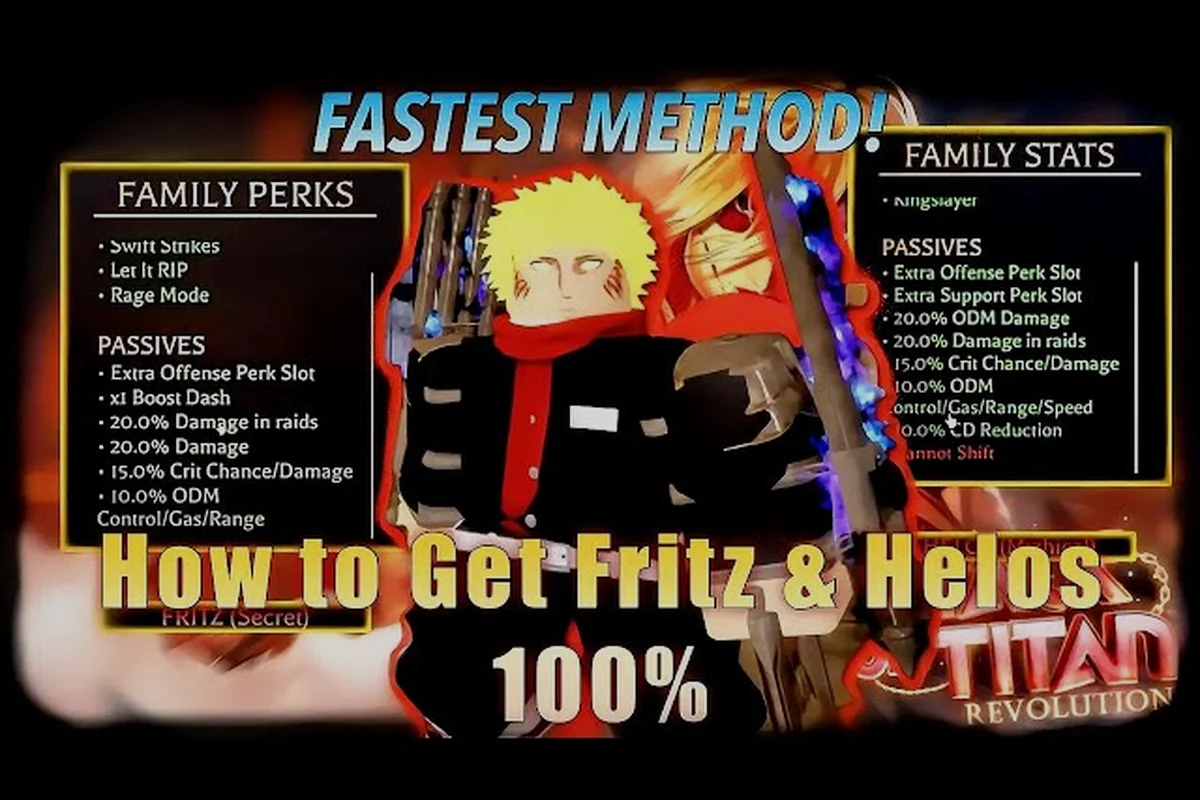
Attack on Titan Revolution family reroll cost matters because each family establishes the passive foundation for your skills, perks, and memories. A reroll can therefore change more than a cosmetic choice: compare the family’s passive bonuses with your preferred activity, such as solo expeditions, raid battles, wave defense, or shifter-focused combat. For beginners, checking reroll pricing and the resulting passive effects before committing helps preserve the family that best supports your build.
Family Reroll Cost Overview
The family reroll system is best understood as an investment decision, not a simple upgrade purchase. A family determines a passive identity and unlocks related family skills, while your perks, memories, and other gear add layers on top. If that foundation does not match the content you want to complete, spending resources on it may create more friction than it solves.
The official the Roblox listing for the game describes families as an identity layer within the game's progression. In practical terms, the family can affect how a build performs from the beginning, which is why many players decide the family before spending heavily on perks.
Community reporting places Yeager at roughly 0.1%, while showcases for legendary clans such as Ackerman, Reiss, and Shiki are often described as being around 0.5%. These are community-reported estimates rather than officially published odds, so they should be treated as planning guidance rather than guaranteed probabilities.
| Roll context | Likely value | Best use |
|---|---|---|
| Beginner account with limited resources | High | Secure a usable family before upgrading other systems |
| Mid-game account with stable gear | Medium | Reroll only when a family conflicts with the desired build |
| Late-game account with multiple endgame paths | Low | Keep the current family unless its passive actively holds you back |
| Free or event-based roll opportunity | Very high | Use it before spending premium currency or scarce items |
This makes the Attack on Titan Revolution family reroll cost easy to evaluate: the numerical price matters, but so do the value of the build already placed on top of the family and the availability of a better timing window.
Why Rerolling Can Be Worth It
A reroll is most valuable when the new family improves the entire build rather than merely adding a stronger number. Family passives can affect the behavior of your damage, mobility, support role, or shifter performance, so a better match can make ordinary upgrades feel more effective. Understanding how family strength depends on the build helps prevent an expensive change that only looks better on paper.
Before rerolling, compare three layers: the current family passive, the family skills available with that clan, and the activities you play most. A clan with excellent potential is not automatically the right choice if its strengths are irrelevant to your preferred mission type.
Paid and Free Family Reroll Options Compared
The most important distinction is between fixed-cost rolls and timed free rolls. A fixed reroll can be worth purchasing when your current family blocks a build, but free opportunities are usually more efficient because they preserve the same premium currency for weapons, memories, or progression elsewhere.
The AoTR-PI community information page reports that reroll sessions are commonly planned around luck boosts because luck affects roll quality. It also recommends settling the family first, then choosing perks around the passive, and finally filling remaining gaps with memories.
| Roll source | Direct cost | Opportunity cost | Best timing |
|---|---|---|---|
| Standard paid reroll | Premium currency or game currency | Removes funds from other upgrades | When a current family is clearly unusable |
| Luck-assisted roll | A potion or boost may be required | Consumes a limited luck resource | During a luck event or before a major build change |
| Free event roll | No direct roll purchase | May still require time or event progress | As soon as the event becomes available |
| Existing-game reroll token | Usually scarce | Delays another account-wide reward | Only for a high-confidence upgrade |
| Hard pity or guaranteed route | Low uncertainty | May require more rolls than expected | When multiple attempts are acceptable |
The order matters because rerolling after investing heavily in specialized perks can leave you with mismatched systems. The official game page explains that family skills are equipped separately from perks and memories. A family change therefore affects the build structure rather than simply adding one more stat.
Calculate the Real Reroll Price
Use this simple calculation: divide the expected cost of another family roll by the number of usable family results it produces. A 1,000-gem reroll with a 10% chance of improving your current build is effectively 10,000 gems per worthwhile result, while a 25% chance lowers that figure to 4,000 gems. This matters because Attack on Titan Revolution family reroll cost should be measured against the chance of gaining a passive that fits your weapon, stats, and activity, not against the headline price alone.
- Reroll value = expected benefit of the new family minus the currency, potion, and upgrade time you give up.
For example, a player with a strong memory set and a functional early-game family may not need to chase a headline clan. A new player with weak general stats gains much more from a family whose passive supports the stats they already collect. This is why the best family for beginners is often simply the one that creates a coherent first build, not necessarily the most talked-about result.
A practical rule is to spend a premium roll only when at least one of these conditions is true: the current passive conflicts with your chosen weapon or combat role, the target family grants a skill that solves a recurring survivability problem, a free or luck-boosted reroll window is active, or your remaining gems can still cover essential gear. For example, if a 1,000-gem roll offers a 25% chance of a compatible passive, its expected cost is 4,000 gems per useful result; rerolling twice at that rate would average 8,000 gems, so compare that total with a cheaper 500-gem alternative before committing.
-
The current passive conflicts with the chosen weapon or activity.
-
The desired family unlocks a skill that fixes a persistent survivability problem.
-
A free or luck-boosted window is available.
-
Your account can still afford essential gear after the reroll.
Do not spend a premium roll merely because a higher-rarity result appears possible. Rarity is not the same as account value if the resulting passive does not improve your build. For instance, a rarer Shifter family that weakens your solo or wave performance can be worth less than a lower-rarity family whose passive complements your weapon stats, memory set, and preferred role; compare the family’s actual stat contribution and skill effect before judging the 1,000-gem reroll.
Choosing the Attack on Titan Revolution Best Family for Solo Play
Solo play rewards consistency, mobility, and the ability to recover from imperfect positioning. The strongest choice is therefore the family that makes your normal attack pattern more reliable, not necessarily the family with the highest theoretical damage. For example, Yeager can fit a general mission-clearing build because its offensive synergy supports steady Soldier or Specialist pressure, while Helos may suit players who need stronger recovery utility against difficult targets. Since reroll costs depend on the rarity and type of family obtained, securing a dependable Yeager, Fritz, or Helos roll can be more valuable than chasing a flashy low-percentage family; compare each family’s bonuses, skill requirements, and role before deciding whether to keep or reroll.
| Solo priority | Family to target | Why it may fit |
|---|---|---|
| General mission clearing | Yeager, Fritz, Helos, or another flexible offensive family | Broad offensive synergy can help across varied encounters |
| Survival and difficult targets | A family with stronger defensive or recovery utility | More time on target reduces the impact of missed attacks |
| Beginner learning | A family with straightforward bonuses and useful skills | Clear effects are easier to understand and build around |
| Resource conservation | A family that improves consistency or efficiency | Fewer wasted attacks can reduce pressure in long sessions |
Community family showcases commonly group Yeager, Fritz, and Helos in the mythic discussion, while Ackerman, Reiss, and Shiki appear frequently in legendary-band showcases. A community video ranking every family in Attack on Titan Revolution is useful for comparing identities, but the video itself does not establish official drop rates.
Solo Evaluation Checklist
Evaluate a prospective family by testing it in ordinary missions before committing expensive resources to its skill tree. Check whether the passive feels active during normal combat, whether the skill supports your weapon, and whether it reduces mistakes rather than requiring a completely new rotation.
The Attack on Titan Revolution best family for solo is the one that handles mixed encounters well. Since solo play often involves switching between crowds, agile opponents, and armored targets, a broadly useful passive may deliver more value than a narrow specialist effect.
Family Reroll Cost: Family Picks for Raids, Waves, and Shifters
Different activities reward different family traits. Raids emphasize sustained team performance, waves test consistency over many encounters, and shifters change the combat rhythm entirely. The right family for one mode can be a poor investment for another, so choosing by activity is more useful than chasing one universal answer.
| Activity | Main consideration | Families commonly discussed by the community | Decision rule |
|---|---|---|---|
| Raids | Team utility and sustained damage | Yeager, Ackerman, Reiss, Shiki, Fritz, Helos | Favor a passive that complements coordinated attacks |
| Endless waves | Efficiency and repeatable damage | Strong offensive or consistency families | Test whether the passive remains useful after several rotations |
| Shifter form | Form-specific damage and control | Depends on the chosen shifter | Match the family passive to the form you actually use |
| Beginner raids | Survivability and simple execution | Clear, dependable bonuses | Avoid a roll that requires advanced support knowledge |
The Attack on Titan Revolution best family for raids should contribute to the group rather than demand perfect coordination from every teammate. If your server tends to use mixed builds, a flexible offensive family may outperform a narrow support choice. For players collecting raid resources, the shard collection guide explains how rewards fit into the wider progression loop.
Raid and Wave Value
A raid family can earn its cost through several small advantages: faster target damage, better uptime, improved survivability, or a passive that benefits the team's timing. A wave family should be judged differently because you face a longer chain of encounters. A small improvement in each room compounds over many waves, which makes efficient damage and recovery especially valuable.
The Attack on Titan Revolution best family for waves therefore rewards consistency over a spectacular but inconsistent opening. A strong wave setup should still handle the first few rooms without requiring every Gas Attack to land; otherwise, its higher family reroll cost becomes difficult to justify once blade durability, gas availability, and temporary ability cooldowns limit damage. Test the family across consecutive wave encounters rather than judging it from one successful opening, and compare whether its passive effects provide reliable value before committing to the reroll.
Shifter Considerations
A family optimized for normal ODM combat may not be the best choice while using a shifter form. Shifter play centers on form-specific damage, crowd control, and punishing attack windows, so the passive must support those mechanics rather than merely improving ordinary blade attacks.
When evaluating the Attack on Titan Revolution best family for shifters, test the passive in each form you can use. Confirm whether it scales with damage, grants useful control, improves survivability, or provides no meaningful benefit in that form. A general-purpose family can remain the safer account choice when you have not committed to one shifter.
Family Strategy for Beginners and Resource Management
For a new account, the main mistake is treating the first family as permanent. The better approach is to identify your weapon direction, available skill points, and expected activity mix. That lets you decide whether your current family supports a viable progression plan or merely looks impressive because of its rarity.
| Account stage | Recommended family decision | Resource focus |
|---|---|---|
| First few levels | Keep a functional roll unless it is clearly unusable | Gas, blades, and core skills |
| Early progression | Reroll with free opportunities or strong luck bonuses | A family that supports the chosen weapon |
| Stable mid-game | Preserve the current family if its passive remains useful | Perks, memories, and gear upgrades |
| Specialized endgame | Reroll only for a specific activity goal | The relevant family skill and supporting stats |
The Attack on Titan Revolution family for beginners should be treated as a flexible foundation. Prioritize a family with a readable passive, a useful skill, and broad enough synergy to survive changes to your weapon or mission plan. This reduces the chance that an early premium reroll creates a powerful family that still fits poorly with the rest of the account.
A beginner should also understand the order of upgrades. Once the family is settled, compare the available perk options using the Attack on Titan Revolution perk tier list. The family creates the framework, but perks determine how effectively that framework performs in ordinary combat.
Free Roll Timing Checklist
Before making a paid reroll, compare its full family reroll cost against the upgrade value it could unlock: a family that boosts your weapon synergy for Story Mode, raids, waves, or solo play may justify more currency than a small stat increase. Check the family’s passive and ability effects against your current build; for example, if your chosen weapon already benefits from the rolled family, paying once can improve damage output across multiple encounters. If the result merely duplicates an existing family or offers little weapon synergy, save the currency and wait for a stronger roll.
- Have you used every currently available free family roll?
- Is a luck potion or temporary luck event active?
- Does the desired family improve your chosen weapon?
- Can you afford the remaining progression items afterward?
- Would a free result let you wait for a better paid roll later?
If several answers are uncertain, wait. The family reroll cost is not just the gems or cash shown on the reroll panel: it also competes with weapon upgrades, memory farming, skill allocation, and other purchases with a clearer payoff. For example, if a new roll would only add a small passive to a weapon you rarely use in Story Mode, saving that currency for weapon mastery or a stronger family for raids and waves may be more valuable than chasing one uncertain result.
Advanced Reroll Timing and Long-Term Value
Advanced rerolling requires a clear stopping rule. Since free opportunities and luck boosts can alter the effective price of every attempt, record the resources spent, the current family, and the reason for each change. This prevents a long sequence of rolls from turning into an attempt to replace an already capable build with a theoretically better one.
| Timing factor | Effect on reroll value | Recommended response |
|---|---|---|
| Luck potion active | Improves expected roll quality | Reroll before the boost expires when practical |
| Free event spin available | Reduces direct cost | Save paid currency for later |
| Limited account resources | Raises the opportunity cost sharply | Set a strict attempt limit |
| Strong existing build | Reduces the value of changing families | Keep it unless the new passive solves a real problem |
| New endgame goal | Raises the value of a targeted family | Compare the passive against that specific goal |
The Attack on Titan Revolution family reroll cost should be measured against the value of your current build, not just the newest result. Community odds suggest that headline families are rare, so a player who continually abandons a working account for marginal improvements may spend far more than the final family is worth.
Use a Two-Roll Rule
A practical rule for many players is to allow no more than two paid family attempts before settling. The first paid attempt should target a clearly needed improvement, while the second can respond to a strong result from the first. If neither produces a family that improves the chosen weapon and activity, keep the current family and redirect resources toward perks, memories, or equipment.
This rule is not a promise of optimal play, because server events and luck bonuses can change the economy. It is simply a safeguard against sunk-cost rerolling. A family remains useful only when it contributes to the build in actual missions.
Final Family Reroll Recommendations
The best reroll strategy begins with preserving free resources, evaluating the family as part of a complete build, and setting a clear limit on paid attempts. A rare family is valuable when its passive improves your chosen activity; otherwise, the stronger economic choice is to keep a workable roll and upgrade the layers around it.
Because family rerolls consume one of the game’s limited progression resources, the decision should be measured against the value of the passive and family skills you would unlock. For example, if your current family already supports your preferred activity, preserve that roll unless a reroll directly fixes a larger build problem; a rarer passive is not automatically more efficient. This keeps the Attack on Titan Revolution family reroll cost tied to practical gains for solo, raid, wave, shifter, or beginner-focused builds rather than rarity alone.
-
Compare the current passive with your weapon, preferred activity, and available family skills.
-
Check for a free roll, event opportunity, or luck boost before spending premium resources.
-
Reroll when the new family fills a specific weakness rather than merely improving rarity.
-
Stop after your attempt limit and redirect resources to perks, memories, and gear.
-
Test the final family in real missions before investing heavily in its skill tree.
That process makes the Attack on Titan Revolution family reroll cost predictable and controlled. The ideal family is not simply the most rare result available; it is the one that remains useful after your weapons, perks, memories, and activity goals are settled.
Frequently Asked Questions
What is the cheapest way to reroll a family in Attack on Titan Revolution?
The cheapest method is to use any available free family roll or event opportunity before purchasing a standard reroll. A luck potion can also improve the expected quality of a roll when supplies allow, but it remains a limited resource. Players should compare the value of a paid attempt with upgrades they would otherwise purchase, such as perks or memories.
Should beginners reroll their family immediately?
Usually, beginners should keep a functional family until they have a free chance or understand their preferred weapon. Rerolling an unusable result can help, but chasing a rare clan before establishing a build often wastes resources. A clear passive that supports the chosen playstyle provides more early-game value than rarity alone.
Which family is most suitable for solo missions?
The best solo family is the one whose passive and skills improve consistency across varied encounters. Yeager, Fritz, and Helos are commonly discussed among mythic community showcases, but their practical value depends on the player’s build. Test normal attacks, recovery, and target selection before investing heavily in a new family skill.
Is a legendary family always better for raids and waves?
No. A legendary family can still be inefficient if its passive does not contribute meaningfully to the activity. Raid builds need sustained or cooperative value, while wave builds need repeatable efficiency. Compare the new passive with your existing gear, perks, and memories before accepting the reroll cost.
How many paid rerolls should a player make?
Set a limit based on the account’s resources and goals. Many players use two paid attempts as a practical stopping rule, beginning with a specific family need and responding only to a genuinely strong result. If the rolls do not solve the build’s problem, keep the current family and spend resources on complementary upgrades.