
Progression
Attack on Titan Revolution progression guide: level 100 prestige, skill tree points, Flashstep, Gold, Gems, Shards, Emperor Keys and Grade ranking.
Introduction
Progression in Attack on Titan Revolution is not one bar but a stack of them. You level to 100, prestige for permanent multipliers, spend skill points on a tree that carries movement and damage, and convert currencies like Gold, Gems, Shards and Emperor Keys into upgrades and rolls. Achievements and Grade ranking sit on top as a separate account-level track. This page explains the order that produces the least waste, when prestige is actually worth it, which currencies gate which system, and why a player who rushes level 100 without a build plan often ends up weaker than someone who prestiged deliberately.
Progression Systems Overview
| System | Unlock Point | What It Gives | Priority |
|---|---|---|---|
| Level 100 | Base cap | Access to prestige | High |
| Prestige | Level 100, full bar | Permanent multipliers, up to rank five | High |
| Skill Tree | Skill points | Movement and damage nodes such as Flashstep | High |
| Currencies | Varies by source | Gold upgrades, Gems rolls, Shards Waves, Keys crates | Medium |
| Grade | Account track | Long-term ranking objectives | Endgame |
Progression Priorities
Prestige
The permanent multiplier track: first prestige at level 100 with a full bar, then later ranks every 25 levels up to prestige five, each one resetting your level. Only reset when you can refarm the level faster than you did the first time.
Skill Tree
The permanent point tree that carries movement and damage nodes, including Flashstep, and shapes how your character feels in every content type. Movement nodes change every mode, while a small damage node is invisible early.
Emperor Keys
A crate currency paid out by codes and milestone rewards, used to open containers rather than to buy upgrades directly, which makes it a burst resource. They arrive in bursts from codes, so plan a crate opening rather than a slow trickle.
Grade Track
An account-level ranking system that community guides cover separately from level and prestige, giving long-term players a checklist beyond the usual farm loop. It is a checklist rather than a power spike, and it rewards breadth over one farm.
Level 100 Cap
The base level ceiling that unlocks prestige, and the checkpoint where most accounts discover whether their farm route and build are actually ready.
Core Mechanics
Levelling builds the base, and prestige converts that level into permanent multipliers while resetting the level itself. Community guidance describes the first prestige at level 100 with a full experience bar, with later ranks unlocking every 25 levels up to prestige five. Skill points are spent on a tree that stays with the account and carries key movement nodes such as Flashstep alongside damage upgrades. Currencies are split by source: Gold buys upgrades, Gems fund rolls, Shards come from Waves and Emperor Keys open crates. Achievements and Grade provide a longer-term checklist that rewards playing every system rather than only one farm.
Advantages
Progression layers compound, which means a well-planned account gets stronger faster the deeper it goes. Prestige multipliers apply to everything you do afterwards, skill points make movement and combat smoother at every level, and currencies that seemed scarce early become routine once the right farm is running. The achievement and Grade tracks also give direction: instead of grinding one mission for a marginal gain, you can work through a checklist that pays across several systems. And because rolls and prestige are both predictable, a patient free-to-play account can reach a competitive state without spending. The compound effect is why a patient account often overtakes one that rushed the first prestige.
Challenges
Prestige is a trap for impatient players. Resetting your level before your build and farm routes are ready can leave you weaker than before, with the same missions taking longer and the same resources arriving slower. Skill point choices are also easy to regret, because spreading points across every branch produces a character that is mediocre everywhere. Currency confusion is common: players spend Gems on rolls while saving Gold for an upgrade they could have bought first. Exact experience curves and prestige bonuses are community-documented rather than officially published. Write down the next three upgrades you want so a currency decision has a target rather than a mood.
Frequently Asked Questions
When should I prestige in Attack on Titan Revolution?+
What should I spend Gems on first?+
How do Emperor Keys and Shards differ?+
Quick Tips
Do not prestige on impulse. A prestige resets your level, so the only thing that matters is whether you can refarm it faster than before. If your farm route is still slow, spend another session improving it; the multiplier you gain from a better route often beats the multiplier you gain from an early reset.
Spend skill points on movement first. Flashstep and the movement nodes change how the game feels in every mode, while a small damage node is invisible until you have a build to multiply it. Movement also keeps you alive, which converts directly into fewer failed runs. Movement also keeps you alive, which converts into fewer failed runs.
Track your currencies separately. Gold, Gems, Shards and Emperor Keys each gate a different system, and treating them as one pool of value leads to saving the wrong resource. Decide which upgrade you want next, then farm only the currency that upgrade needs. Save the currency that the next upgrade needs instead of spreading it thin.
Featured

Attack on Titan Revolution How to Get Gems Fast
Learn Attack on Titan Revolution how to get gems through Emperor Keys, Lucky Spins, achievements, and repeatable farming methods.

Attack on Titan Revolution Luck Guide for Better Rolls
Improve Attack on Titan Revolution luck with Lucky Spins, Gems, achievements, gamepasses, and grade-reroll tactics for stronger rewards.
Attack on Titan Revolution Max Level and Fast Leveling Guide
Reach the Attack on Titan Revolution max level with efficient XP farming, skill-point choices, Gold upgrades, and the permanent 5% group bonus.
All Articles

Attack on Titan Revolution Operative Dominance Explained
Explore Attack on Titan Revolution operative dominance, including Battle Prowess, Mortality Master, Shock Absorber, and True Scout effects.
Attack on Titan Revolution Prestige Guide to Prestige 5
Master Attack on Titan Revolution prestige requirements, level 100 timing, Scroll rewards, and the fastest route to reach Prestige 5.

Attack on Titan Revolution Skills Tier List for Best Builds
Compare the best skills in Attack on Titan Revolution, learn which passives deserve skill points, and find practical ways to improve luck and unlock Flashstep.
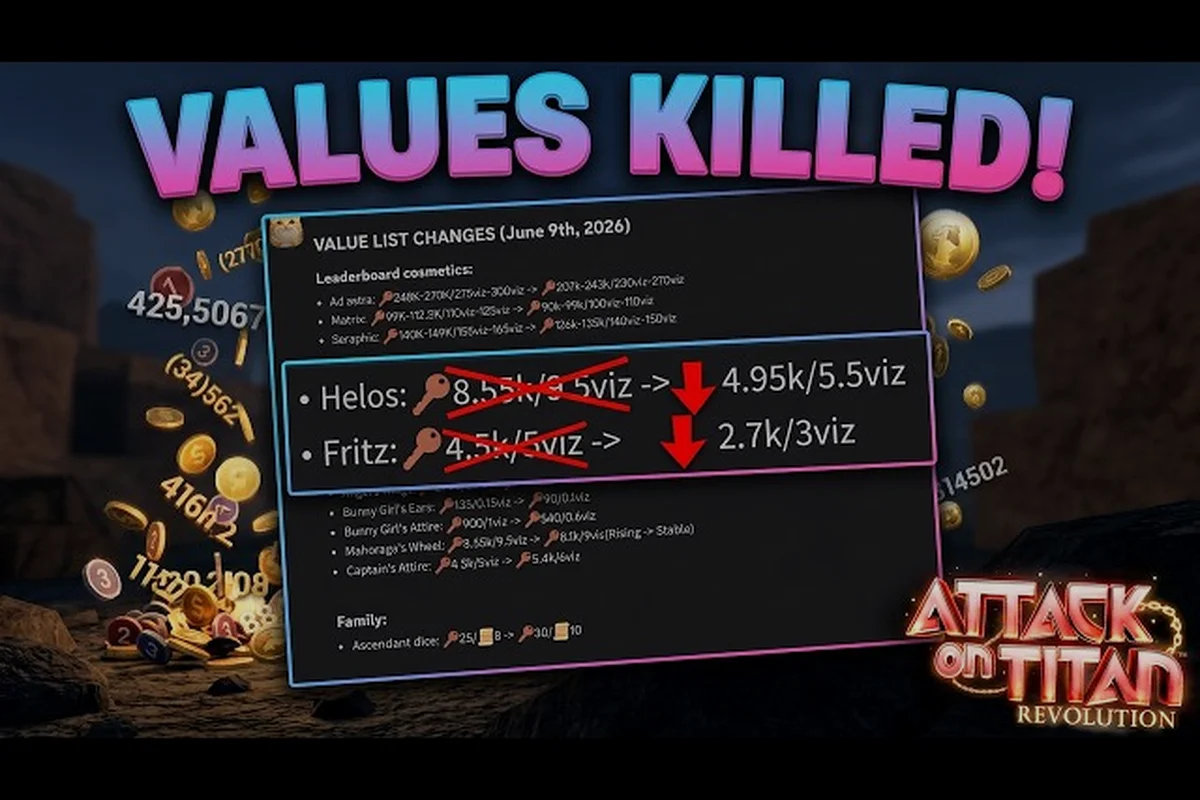
Attack on Titan Revolution Value List: Grade and XP Picks
Explore Attack on Titan Revolution value list rankings for families, perks, grades, Flashstep, XP farming, and resource priorities that matter most.