
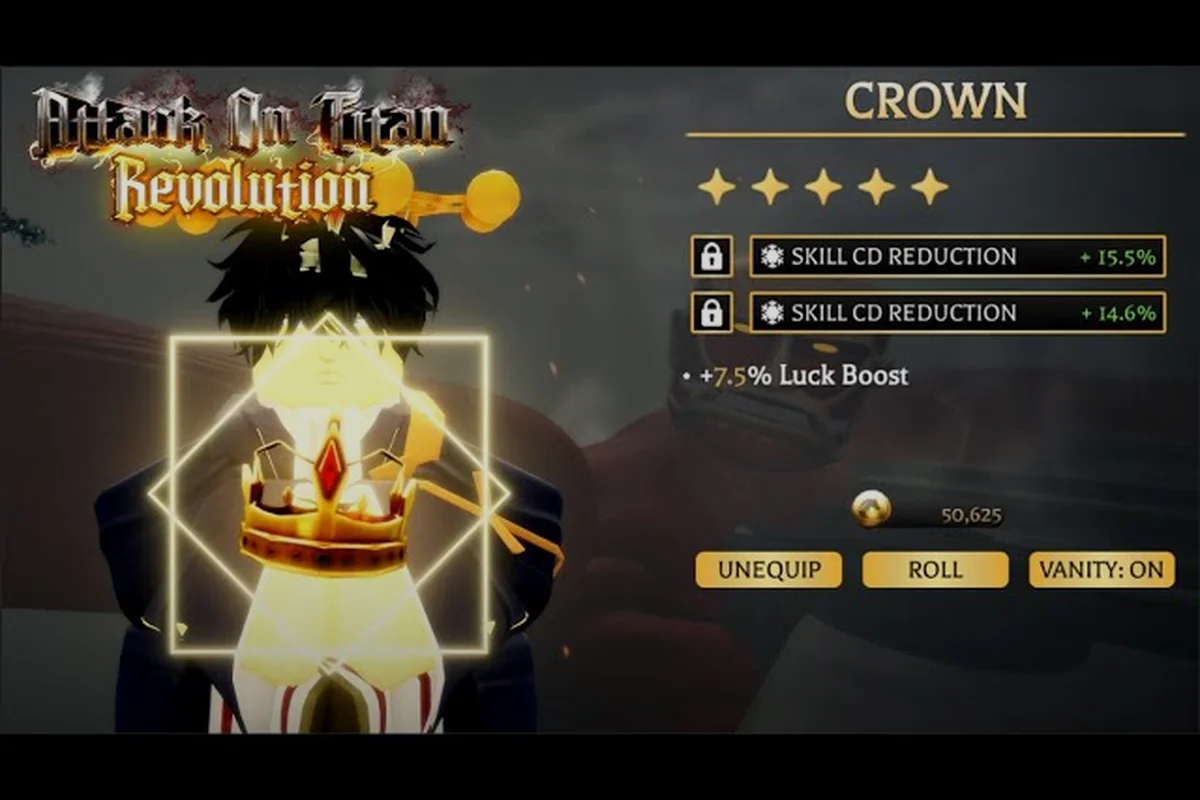
Attack on Titan Revolution new artifacts can reshape a build after Update 4, so comparing their effects and locations matters before you spend rare materials. See which drops are worth farming, how the tiers differ, and how Mythic pieces fit around Memories, Vessels, and Divine perks.
New Artifacts Overview
Update 4 added another layer to the gear side of Attack on Titan Revolution, where an artifact is a content-gated equip with a unique effect. Unlike a Memory, which is rolled into an available slot, an artifact is obtained as a specific piece and then evaluated by its passive or active benefit.
That distinction makes the Attack on Titan Revolution artifact showcase especially useful for comparing drops without treating every purple or gold item as an automatic upgrade. A strong piece can still be wrong for a build if its effect does not improve the character’s normal attack pattern, stamina management, or survivability priorities.
| Gear layer | How it is acquired | Main decision |
|---|---|---|
| Artifact | Specific content-gated drop | Whether the effect supports the build |
| Memory | Rolled slot | Whether the stat fills a weakness |
| Vessel | Remaining gear slot, shown in community showcases | Whether its Divine perk complements the setup |
| Divine perk | Featured in community-tested showcases | Whether the passive supports the artifact |
The official Roblox listing describes the artifacts, Memories, and Vessels as separate gear-side layers. In practical terms, one equipped artifact does not replace the other systems. A complete build can combine a Mythic artifact, rolled Memories, a Vessel, and a suitable Divine perk.
What Changed With Update 4?
Update 4’s artifact additions broaden the choices available to players who have reached the appropriate content. The important change is not simply that more items exist; it is that Rare and Mythic drops now offer more distinct approaches to a single combat encounter. Some pieces reward repeated strikes, while others improve mobility, resource efficiency, or damage under specific conditions.
Because exact percentages can vary by version, the safest approach is to test an artifact in the situations where it will actually be used. An item that feels excellent during a short damage check may be less valuable during a long mission where stamina, crowd control, and survival determine the result.
| Priority | What to inspect | Why it matters |
|---|---|---|
| 1 | Damage condition | Confirms that the bonus activates during normal rotations |
| 2 | Stamina interaction | Shows whether mobility improves or becomes more expensive |
| 3 | Survival value | Prevents a damage bonus from being wasted after a mistake |
| 4 | Build compatibility | Separates a generally strong item from a situational one |
| 5 | Upgrade potential | Determines whether the investment can scale with progression |
The Core Decision: Damage, Mobility, or Reliability?
Most early artifact choices reduce to three practical categories. Damage pieces help close encounters faster, mobility pieces improve positioning and resource use, and reliability pieces reduce the cost of mistakes. The best category depends on whether the character already lacks raw damage, mobility, or consistency. A high-rarity item is not automatically superior for every player. The value comes from the interaction between its effect and the build’s other gear, so players should compare the full setup before committing rare materials to an upgrade.
Rare Artifacts Versus Mythic Artifacts
Rare artifacts are easier to evaluate because their value is usually more visible, while Mythic artifacts demand closer attention to activation conditions and opportunity cost. For example, a Rare artifact that adds reliable attack-triggered value can remain useful even when a Mythic effect’s condition is unmet, making the Mythic pickup harder to justify without dedicated support. The following comparison focuses on decision quality rather than assigning unsupported numerical tiers.
| Factor | Rare artifact | Mythic artifact |
|---|---|---|
| Acquisition | More practical as a regular progression target | Often tied to limited or difficult content |
| Effect clarity | Usually easier to activate repeatedly | May reward precise play or a narrow condition |
| Build impact | Helpful across several situations | Potentially stronger when fully supported |
| Upgrade cost | Easier to evaluate and replace | A poor fit can become an expensive mistake |
| Best use | Solid foundation for developing builds | High-performing centerpiece for a finished setup |
This distinction is essential when reading any Attack on Titan Revolution mythic artifact showcase. A Mythic effect can produce an exciting burst, but it may be less dependable than a Rare effect that activates whenever the character attacks. Players should value consistency alongside the larger number attached to the item.
Why Rare Artifacts Matter for New Drops
Rare artifacts remain useful even when Mythic pieces are available because they can fill a gap that a build does not yet cover. A player with high damage but poor stamina control may prefer a Rare mobility or efficiency piece over a Mythic damage option that adds little practical output.
The support role of a Rare artifact can be easier to maintain because its effect is less dependent on perfect timing. That makes Rare drops particularly useful while a character is still learning mission patterns, experimenting with a new team role, or saving rare upgrade materials for a more proven Mythic centerpiece.
When Mythic Effects Are Worth the Chase
A Mythic artifact is most attractive when its condition matches the build’s normal combat rhythm. Repeated attacks, successful dodges, movement between targets, and sustained pressure are common design ideas, but the exact effect must be read on the item itself rather than assumed from its rarity.
The Update 4 artifacts video by JustBOZ is a useful community showcase for seeing the artifacts in motion. Treat it as visual evidence of their behavior, while checking the current in-game description for exact conditions because balance changes can alter the practical value of an effect.
Artifact Effects at a Glance
The following table focuses on broad effect categories rather than claiming exact stats that were not supplied in the official research. It helps compare what an artifact is asking the player to do, such as sustaining repeated damage, activating a conditional effect, improving movement or stamina, supporting gear rotation, or adding survivability. Because Attack on Titan Revolution’s new artifacts and rare artifacts may change through balancing patches, these categories offer a practical way to compare mythic artifact effects without mistaking unverified values for confirmed damage, cooldown, or buff numbers.
| Effect category | What it rewards | Best fit | Main drawback |
|---|---|---|---|
| Repeated damage | Maintaining attack pressure | Aggressive melee characters | Less useful during downtime |
| Conditional damage | Meeting a specific trigger | Builds with reliable activation conditions | Requires attention |
| Movement or stamina | Repositioning efficiently | Fast or evasive characters | May offer less direct damage |
| Resource efficiency | Reusing gear or abilities | Players who rotate several tools | Benefits depend on play style |
| Survivability | Recovering from pressure | Risk-averse or beginner-friendly builds | Can reduce damage potential |
Artifact Effects by Build
A useful Attack on Titan Revolution artifact effects comparison starts with the character’s repeated actions. Because the artifact, Memory, Vessel, and Divine perk occupy different layers, an effect can strengthen an existing strength or compensate for a weakness. The best result comes from completing that puzzle instead of evaluating one icon in isolation.
| Build goal | Artifact effect to seek | Supporting gear direction | What to avoid |
|---|---|---|---|
| Fast boss damage | Reliable or high-tempo damage | Memories for critical stats and a Vessel with a compatible Divine perk | A damage effect that rarely activates |
| Stamina control | Mobility, efficiency, or reduced action cost | Memories that cover defensive or movement shortcomings | An effect that demands extra movement |
| Beginner consistency | Simple, broad activation | Memories that fix major stat gaps | A narrow conditional Mythic effect |
| High-risk play | Damage with a clear reward condition | Defensive Memory rolls and stable Divine perks | A setup that only works at full health |
Aggressive Melee Builds
Aggressive melee builds need effects that reward staying in combat rather than making cautious positioning the main objective. A repeated-damage bonus can feel excellent when the character already has enough stamina and defense, but it becomes less valuable if every hit exposes the team to interruption.
For this play style, prioritize an artifact whose condition survives ordinary rotations. The Attack on Titan Revolution rare artifacts worth considering are often not the ones with the biggest headline number; they are the effects that remain active while the player handles normal mission mechanics rather than an isolated target.
Mobility-Focused Builds
Mobility-focused characters value access, spacing, and repeatability. An artifact that improves movement or efficiency can outperform a larger damage number because it allows more attacks, better target selection, and fewer wasted openings. Test it on crowded objectives as well as individual enemies because movement effects often show their value in dense encounters. The best artifact guidance for Shifters provides a useful framework for comparing artifacts with Memories. That comparison matters because a build can have excellent raw stats but still feel awkward when its equipment asks for a different movement pattern.
Survival and Beginner Builds
A survival effect is often easier to value than a rare damage condition because it prevents a bad turn from ending a mission. This does not mean the safest effect is always strongest; a build with excessive durability may benefit more from improved tempo. For new players, however, consistent activation and forgiving conditions usually provide more value.
Reliable is better than impressive when the build has unfinished Memory slots or an uncertain Divine perk. For example, leave a spare Memory slot open if the current artifact set lacks a stable defense or healing effect, rather than activating a Divine perk whose proc chance is hard to reproduce. Once those layers are complete, the player can more safely specialize around a stronger condition or a Mythic centerpiece, because the dependable portion of the build will already cover the main risk of a failed activation.
New Artifacts: Artifact Location and Farming Route Planning
Finding an artifact is only half the task; the location also determines whether the piece remains a realistic long-term target. Use the in-game artifact screen to confirm the destination before organizing a farm, because different content may have separate requirements, access conditions, and progress gates.
| Location stage | What to do | Why it matters |
|---|---|---|
| First check | Open the artifact interface and inspect the required source | Prevents farming the wrong route |
| Progress gate | Complete the listed quest or unlock condition | Confirms the drop can be reached |
| Farm run | Repeat the relevant mission | Gathers attempts and potential drops |
| Evaluation | Check the effect and build fit | Avoids upgrading by rarity alone |
| Upgrade | Invest materials only after confirmation | Preserves resources for a better piece |
Confirm the Requirement Before Farming
The Attack on Titan Revolution artifact location should be checked directly in the interface rather than inferred from a guide, an outdated video, or a community answer. The research confirms that artifacts are content-gated equips, but it does not provide a universal, verified list of every artifact’s mission or drop rate. Inventing that list would create misleading farming advice.
Look for the artifact’s name in the collection or reward screen. If its location is hidden, complete the relevant quest or meet the displayed requirement first. The artifact quest guide can help organize the quest and upgrade portion of that process.
Choose the Farm by Deficit
A farm should target the missing part of the build rather than simply repeat the mission that produced the player’s most recent Mythic item. If the character already has sufficient damage, farming another damage artifact offers little marginal value. Mobility, efficiency, or a dependable survival effect may fill the real gap.
| Current build need | Priority target | Reason to farm |
|---|---|---|
| Low damage | Mythic damage artifact | Shortens battles and improves clear speed |
| Poor stamina use | Mobility or efficiency artifact | Increases effective action time |
| Unstable survival | Broad defensive effect | Protects other bonuses from being wasted |
| Empty stat coverage | Memory-focused progress | Supports the artifact with better underlying stats |
| Missing endgame passive | Vessel with a Divine perk | Completes a different gear layer |
Use Every Reliable Reward
A single target may take several attempts, so farm sessions should collect other rewards whenever possible. Memories, upgrade materials, and Vessels remain useful even when the desired artifact does not drop. This approach turns each run into progress across the complete equipment setup instead of treating every failed attempt as wasted time. Community showcases indicate that Vessels and Divine perks appeared alongside the later gear layers, but those details are community-tested rather than confirmed by official patch notes. Treat them as current community information and verify each mechanic inside the game.
Mythic Artifact Upgrades and Resource Decisions
A Mythic artifact becomes expensive when its upgrades require materials that could also support Memories or other progression systems. Before upgrading, compare the marginal improvement with the benefit of leaving those resources available. Upgrade value equals practical benefit divided by total cost, and rarity should not override that calculation.
| Decision | Upgrade now | Save resources |
|---|---|---|
| Effect fit | Matches the character’s normal rotation | Requires an unfamiliar play style |
| Build gaps | Fixes a clear weakness | Duplicates a strength |
| Activation | Works consistently | Has a narrow condition |
| Other gear | Memories and Vessel support it | Important gear layers remain incomplete |
| Replacement odds | Likely to remain useful | Another drop may soon replace it |
Check the Full Equipment Layer
Before settling on an artifact, inspect the character’s other gear. A rolled Memory may fill the missing stat, while the Vessel’s Divine perk changes how the artifact performs. This is why the Memory reroll guide is relevant even when the main goal is an artifact: better supporting rolls can make the same artifact produce a much stronger overall build.
Use the in-game stat screen to compare the current setup with a hypothetical replacement rather than judging an artifact by its headline effect alone. Check the resulting Attack, Defense, Speed, and SP values after accounting for the equipped Memory, Vessel, and Divine Perk interactions; a strong Mythic artifact effect can still underperform in the full build when its supporting rolls waste those bonuses. For example, a +10% Attack piece may raise raw damage less than a smaller Attack increase that also improves Speed and lets the character act before an enemy’s Deathblow sequence.
Avoid These Upgrade Traps
The most common trap is upgrading a Mythic item before understanding its trigger. Another is saving every rare material for the first attractive drop instead of comparing expected value. A third is forgetting that the artifact is only one layer, while the character also needs Memory rolls, a Vessel, and a suitable Divine perk. Use the same mission and encounter type when comparing candidates. This controls for mission difficulty and makes the result easier to interpret. Record the artifact’s condition, the character’s normal rotation, and the point at which the effect becomes noticeable.
| Trap | Why it hurts | Better decision |
|---|---|---|
| Upgrading for rarity | A rare effect can be irrelevant | Test the condition first |
| Ignoring the trigger | The bonus may rarely activate | Perform a controlled mission |
| Completing one layer only | The overall build remains uneven | Review every gear slot |
| Chasing one exact drop | Farming can become inefficient | Collect all rewards along the way |
| Trusting old percentages | Balance may have changed | Verify the current item description |
Build a Balanced Test Routine
For a controlled test, keep Memories and Vessels unchanged first. Change only the artifact, run the encounter, and note damage, movement, and survival. Then adjust one supporting layer at a time. That process is more reliable than replacing several pieces and trying to guess which change produced the improvement.
Artifact Showcase Checklist
Before committing rare materials, compare the candidate Rare or Mythic artifact against the build it will replace: if the new piece raises damage but reduces mobility, it may perform worse against faster enemy types. Use the checklist below to validate its artifact effects, source, and upgrade value in the current game interface.
-
Effect condition: Can the character trigger it during a normal mission?
-
Build fit: Does it improve damage, mobility, efficiency, or survival without creating a larger weakness?
-
Gear support: Do the Memories, Vessel, and Divine perk strengthen the artifact’s purpose?
-
Source verification: Was the Attack on Titan Revolution artifact location confirmed in the current game interface?
-
Drop awareness: Is the collection tracking the correct Rare or Mythic piece?
-
Resource value: Is the upgrade more valuable than saving materials for another gear layer?
-
Practical test: Did the artifact perform consistently in a familiar encounter?
-
Replacement risk: Is another drop likely to fill the same role better?
A Complete Build Decision
The strongest Update 4 artifact is the one that turns a normal action into a measurable advantage without undermining the rest of the equipment setup. Rare artifacts can provide the dependable foundation, while a Mythic artifact becomes most valuable when its condition matches the player’s established rhythm.
The best route is to verify the collection entry, farm the relevant content, compare the effect with the build’s deficits, and upgrade only after a controlled test. That sequence prevents rare materials from disappearing into a flashy but inactive piece.
Frequently Asked Questions
What are the new artifacts in Update 4?
Update 4 added artifacts with distinct effects and Rare or Mythic rarity, giving players more ways to adjust combat builds. The reliable way to inspect the complete current set is the artifact collection interface, because exact names and balance may change with later versions.
Should I use a Rare artifact instead of a Mythic artifact?
A Rare artifact can be the better choice when its effect activates consistently and fills a real build weakness. A Mythic artifact is preferable when its condition fits the character’s normal combat rhythm and the surrounding Memories, Vessel, and Divine perk support it.
Where can I find the artifact location in the game?
Open the artifact collection or reward interface and inspect the desired item’s requirements. Artifacts are content-gated equips, so the exact source may depend on the piece; follow the displayed quest or unlock condition instead of relying on an outdated external list.
Are Update 4 Mythic artifacts always stronger?
No. A Mythic rarity does not guarantee stronger results in every situation. Its practical value depends on activation frequency, the character’s combat rotation, supporting Memories and Vessels, Divine perk compatibility, and whether the build already covers that bonus. For example, a Mythic artifact that activates only after several successful hits may be less useful in a fast, evasive rotation than a Rare artifact with a shorter condition, especially when another equipped artifact already provides the same stat bonus.
How should I decide which artifact to upgrade first?
Upgrade the artifact that addresses your clearest combat weakness and has an effect that activates during your normal rotation. Compare its practical value with the materials reserved for Memories or Vessels—for example, a reliable Rare artifact may outperform a Mythic piece that requires several consecutive hits if your build already covers that bonus. Test it in a familiar Story Mode encounter, then check activation frequency, damage uptime, and Divine perk synergy before spending more rare materials.