
An Attack on Titan Revolution artifact tier list matters because the right modifier can reshape a build without changing its weapons or stats. Compare every available effect to find the strongest upgrades for damage, ODM speed, survival, and Update 4 goals.
Artifact Tier List Overview
Artifacts in Attack on Titan Revolution provide passive effects that can influence damage, movement, durability, and farming efficiency. The best artifacts are not automatically the rarest ones, because a well-matched effect can outperform a flashy drop that does not support your current setup. This ranking evaluates the available effects by practical impact, build compatibility, and how consistently they help across different activities.
The artifact system works differently from a simple equipment ladder. Each item modifies a particular part of combat, so the most valuable option depends on the gap in your current build. A player who lacks mobility may value ODM speed more than another round of raw damage, while someone farming resources may prefer bonuses that improve gold, experience, or completion speed. Community guides, including the Update 4 artifact showcase by JustBOZ, help illustrate the current pool of modifiers. This guide organizes that information into a practical tier system instead of treating every artifact as equally desirable.
| Tier | General meaning | Best users |
|---|---|---|
| S Tier | Exceptional, build-defining effect | Optimized and endgame-oriented players |
| A Tier | Very strong and broadly useful | Most experienced players |
| B Tier | Strong with a clear use case | Focused build builders |
| C Tier | Helpful situational bonus | Early-game or incomplete builds |
| D Tier | Narrow effect or low practical impact | Collectors and temporary progression gear |
These categories describe relative performance rather than absolute values. A lower-tier effect can still be the correct choice when it fills a missing slot, while an S-tier modifier may underperform if its bonus is wasted on the player’s current equipment or routine.
Best Attack on Titan Revolution Artifacts by Combat Role
The strongest Attack on Titan Revolution best artifacts depend on what the build is trying to accomplish. Damage artifacts excel when their bonuses apply consistently to the attacks players use most often. ODM-oriented effects are more valuable in difficult missions and timed objectives, where faster movement can prevent damage and improve positioning. Survival artifacts extend playtime by reducing the impact of mistakes.
Because no confirmed values were supplied for every individual effect, this ranking evaluates each artifact’s function using its intended mechanical role. The result is a practical guide rather than a fabricated damage calculation, and it should be checked against the current inventory if a balance patch changes the meta.
Damage and Raw Power
Damage effects occupy the upper end of the ranking when they improve the player’s primary offensive loop. Their value rises with strong weapons, reliable critical hits, and missions where short battles make every percentage point valuable. They become less consistent in builds centered on support, exploration, or resource collection.
| Artifact category | Tier | Why it performs well |
|---|---|---|
| Direct damage modifier | S | Amplifies the stat most players prioritize during combat |
| Critical damage modifier | A | Rewards precise timing and high-risk attacks |
| Attack-speed modifier | A | Increases actions per second and can improve mission pacing |
| Flat minor damage increase | B | Helpful, although usually less transformative than percentage effects |
| Damage effect with a narrow condition | B | Strong when the condition is easy to maintain |
A conditional artifact should not be rated only by its ceiling. If it requires a particular stance, weapon category, or attack type that the player rarely uses, its real value is closer to B tier than S tier. The effective multiplier in an average session matters more than the most impressive possible result.
ODM Speed and Mobility
ODM speed artifacts rank highly in the Attack on Titan Revolution artifact tier list because movement affects both safety and execution. Quicker traversal reduces the time spent exposed, helps players reach distant targets, and creates more opportunities for evasive attacks before a Titan closes the distance.
| Mobility effect | Tier | Practical benefit |
|---|---|---|
| Broad ODM movement increase | S | Improves positioning across nearly every mission |
| Gas-drain reduction | A | Supports longer attacks without relying on excessive stat upgrades |
| Dodge-related modifier | A | Adds a second layer of protection when paired with movement gear |
| Narrow traversal bonus | B | Useful in specific maps or objective types |
| Convenience-only mobility effect | C | Helpful but unlikely to change overall performance |
Mobility equipment also interacts with Casting Distance and stamina management. A build can look slower on paper yet feel stronger in practice if its gear prevents wasted movement. Players comparing stats should review the Damage Calculator to separate movement benefits from offensive bonuses.
Survival and Consistency
Survival artifacts are often underrated in early rankings because they do not produce flashy damage numbers. They remain valuable when they prevent an expensive death, preserve resources, or maintain performance during long farming sessions. Their contribution may be easier to feel than to calculate.
| Survival effect | Tier | Why it belongs here |
|---|---|---|
| Large damage reduction | S | Directly improves the margin for error in difficult fights |
| Defensive effect with broad uptime | A | Protects the player without requiring constant management |
| Healing or recovery modifier | A | Improves the effective length of a run |
| Conditional damage reduction | B | Valuable when the trigger matches normal play |
| Small defense increase | C | Usually supplementary rather than build-changing |
Survival bonuses become more valuable as players move into harder missions. They also pair well with farming because fewer interruptions can mean more objectives completed before a defeat. A practical player should test an artifact with the content they actually repeat, rather than selecting solely from a menu description.
All Artifacts by Rarity and Effect
The Attack on Titan Revolution all artifacts collection includes modifiers tied to different combat priorities and resource goals. Artifact rarity in this game is not a complete measure of power, so the list below separates collection status from tier performance. That prevents a rare item with a narrow effect from automatically outranking a versatile modifier.
| Rarity group | General placement | Interpretation |
|---|---|---|
| Mythic | S to A tier | Usually reserved for major effects, though exact contents depend on the current pool |
| Legendary | A to B tier | Often powerful, but several effects may support specific play styles |
| Rare | B to C tier | Can complete early builds and provide useful focused bonuses |
| Uncommon | C tier | More useful during early progression or while filling unfinished slots |
| Common | C to D tier | Functional progression pieces rather than end-state priorities |
This rarity structure is a general framework because individual artifact names and exact drops are not publicly documented at the time of writing. Players should treat the in-game rarity label as one signal among several and compare the effect itself with their build.
Collecting the Complete Artifact List
To build an Attack on Titan Revolution artifact list, record each effect as it enters the inventory. Sorting by rarity helps reveal collection gaps, but sorting by function is more useful when optimizing equipment. A practical spreadsheet can use the following columns.
| Tracking field | What to record | Why it helps |
|---|---|---|
| Artifact name | Exact in-game name | Prevents confusion after balance changes |
| Effect | Complete modifier text | Makes comparison more precise than rarity alone |
| Rarity | Color or rarity label | Shows collection progress |
| Slot | Equipment position | Reveals conflicting bonuses |
| Build | Damage, mobility, survival, or farming | Supports faster loadout changes |
| Upgrade level | Current enhancement | Shows remaining potential |
Tracking these fields makes it easier to notice when several items provide nearly the same effect. If three artifacts improve damage while the build lacks gas efficiency, swapping one for a movement or drain modifier can produce a more balanced and effective setup.
Rarity Versus Practical Value
The Attack on Titan Revolution artifact rarity label indicates collectability, but it does not reveal how well an item fits a player’s routine. A broad damage effect may be less valuable to a mobility specialist than a rare survival modifier. Conversely, an uncommon effect that fills a critical slot can outperform a legendary piece with no clear synergy.
Players should use three filters when ranking a new drop: compare its effect strength against similar modifiers, estimate the activation rate within the player’s preferred combat style, and measure its build impact against the artifact slots already equipped. For example, a mobility-focused Scout Regiment build may prioritize an artifact that preserves Movement Speed or adds damage during evasive maneuvers, while an uncommon effect that strengthens a frequently used skill can be more valuable than a legendary modifier with little synergy.
-
Effect strength: How large is the benefit compared with similar modifiers?
-
Activation rate: How often does the player meet its condition?
-
Build impact: Does it solve a weakness or merely repeat an existing strength?
This approach turns the artifact tier list into a practical ranking tool rather than an endless chase for the highest rarity label. For example, a Legendary artifact that boosts raw Attack Damage may rank below an Epic Movement Speed bonus if the latter is consistently active during ODM evasive maneuvers. Likewise, a Rare Cooldown Reduction modifier can outperform a higher-rarity effect when it enables more frequent Special Attack rotations. Comparing trigger conditions, attribute totals, and slot conflicts in the artifact inventory keeps decisions based on observable performance in normal missions, while accounting for how each drop complements the equipped artifact build.
Artifact Guide for Drop Farming
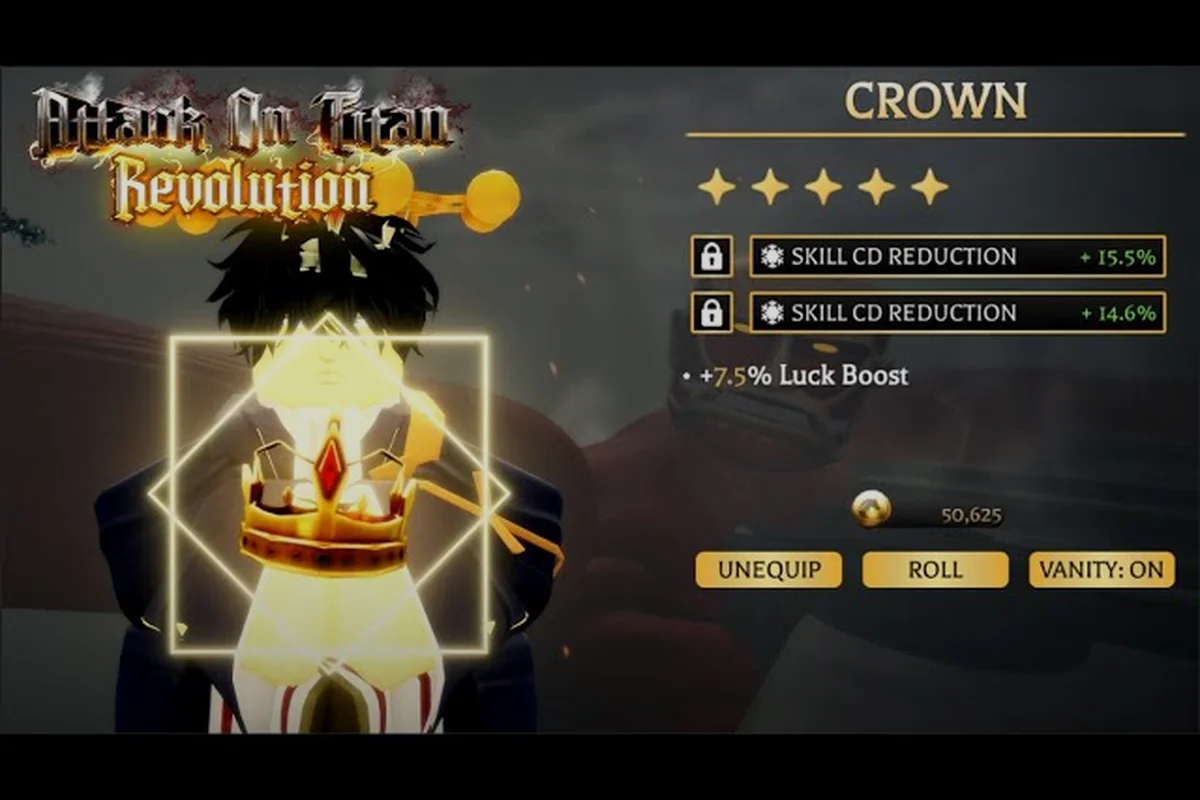
Knowing the Attack on Titan Revolution how to get artifacts process is essential because the best item is only useful when it can be equipped and improved. Verified community information indicates that artifacts are obtained through specific content rather than appearing as universal random drops. The Crown, for example, is treated as a dedicated farm, showing that some artifacts require targeting a particular source. Players who want exact routes can use the artifact farming guide to organize their farming priorities. The most efficient approach is to record which effect is still missing, identify its source, and only then repeat the corresponding activity.
| Goal | Preferred approach | Reason |
|---|---|---|
| New modifier | Complete a range of artifact-related activities | Increases exposure to different effects |
| Specific artifact | Farm its associated content | More efficient than relying on unrelated drops |
| Rarity collection | Repeat high-tier sources after completing basic needs | Balances collection with practical upgrades |
| Build completion | Equip the best effect for each missing stat | Produces more value than duplicating bonuses |
Choosing Efficient Farm Sessions
Artifact runs and memory sessions use different progression rules. Artifact opportunities follow specific content, while memory sessions depend on rolls and are therefore better scheduled around available luck potions. Longer sessions can also be more productive because the verified Roblox group page lists a group-membership bonus of 5% experience and 5% gold, with the server capped at 20 players.
| Farming consideration | Practical decision |
|---|---|
| Missing effect | Target its known source first |
| Memory roll timing | Use a luck session when the desired roll is available |
| Group availability | Join the verified group before a longer session |
| Session length | Continue only while rewards and objectives remain productive |
| Inventory space | Keep room for upgrades and alternative build pieces |
Efficiency should be measured by useful artifact progress, not raw drops per minute. For example, finishing a difficult artifact source can deliver a rarer tier and support a stronger memory roll, making a longer session worthwhile even if a common-drop run ends sooner. Prioritize sessions that preserve inventory space for upgrades, account for the verified Roblox group’s 5% experience and 5% gold bonuses, and stop when the remaining artifact objectives no longer justify the time or resource cost.
Upgrade and Quest Decisions
An artifact should also be judged by its upgrade path. A strong effect with a poor upgrade state may contribute less than a moderately strong item that has already reached a useful level. The artifact quest and upgrade guide explains how quests fit into that progression, including how upgrade decisions and comparisons can affect the final build.
| Decision point | Better choice |
|---|---|
| Same effect, different rarity | Use upgrade potential and inventory value |
| Damage versus gas efficiency | Match the choice to mission difficulty |
| New rare effect versus upgraded common effect | Consider whether the new effect fills a missing role |
| Multiple similar artifacts | Keep the strongest general option and useful specialists |
Upgrading one artifact should not prevent players from keeping a situational backup. Damage specialists, for example, may still want a separate mobility or farming loadout. The practical goal is not a one-item inventory; it is a set of dependable options for different activities.
Recommended Loadouts for Different Player Goals
An effective Attack on Titan Revolution artifact guide should turn rankings into loadouts. The strongest general set prioritizes one broad offensive modifier, one movement or efficiency modifier, one survival modifier, and one farming bonus. This creates coverage across the most common activities without forcing every effect into the same slot.
| Player goal | Priority loadout | Secondary choice |
|---|---|---|
| Fast mission clears | Broad damage plus ODM speed | Survival modifier |
| Hard solo battles | Damage reduction plus healing or recovery | Direct damage bonus |
| Resource farming | Gold or experience effect plus movement speed | Convenience modifier |
| Artifact collection | Diverse rarities with upgrade materials reserved | Duplicate effect for comparison |
| New-player progression | Simple broad bonuses | Rare but simple effects |
The Update 4 Effect set should be evaluated within these goals rather than ranked as a separate game-wide tier. An update-specific artifact can dominate a particular activity while remaining secondary in general combat. Community gameplay videos also show that builds continue changing between updates, so players should reevaluate their setup whenever the current pool changes.
Balanced Endgame Setup
A balanced endgame inventory begins with a general damage artifact, followed by an ODM movement or gas-efficiency piece. A defensive modifier protects against punishing encounters, while the final slot can support farming or the player’s preferred mission type. This arrangement avoids stacking the same bonus in every slot and reduces the impact of one temporary weakness. Before committing to the setup, compare the results with the new artifacts overview. That overview is particularly useful when an update introduces a rare item and it is unclear whether the new effect should replace an established piece.
When to Replace an Equipped Artifact
Replace an equipped artifact when it no longer contributes meaningfully, blocks a stronger build, or prevents access to a needed farming effect. Do not change the entire set simply because a higher-rarity item appears. Compare activation rate, build fit, and upgrade value before making a swap.
When reviewing an Attack on Titan Revolution artifact tier list entry, compare the current piece with its closest alternative by rarity, stat roll, and set effect rather than tier badge alone. For example, replacing a rare artifact merely to gain a higher-tier Scout or Fighter effect can reduce Attack Speed or Crit Rate, so a slightly lower-ranked artifact may remain the stronger choice when its stats match the build’s core damage formula.
-
Does the new effect solve a current weakness?
-
Can the player maintain its condition during normal play?
-
Does another equipped artifact already provide the same benefit?
-
Is the required upgrade affordable without delaying other goals?
-
Will the new piece remain useful after the next update?
This checklist keeps inventory decisions stable while making it easier to distinguish a genuinely stronger artifact from a temporary novelty. In an Attack on Titan Revolution artifact tier list, rarity should be treated as a starting point rather than the final verdict: compare Attack Speed, Crit Rate, and the artifact’s set bonus against the damage formula already used by the build. For instance, a Scout artifact may rank below a Fighter artifact on paper yet perform better when its Crit Rate and activation effect compensate for the rarer item’s lost Attack Speed. Upgrade value also matters, because an artifact that requires several costly enhancement materials may be less practical than a lower-tier piece that immediately fills an unoccupied stat gap.
Practical Artifact Evaluation Checklist
The Attack on Titan Revolution artifact tier list is best used as a decision framework, not an automatic equip order. First identify the objective, then inspect the effect, activation conditions, rarity, slot, and upgrade level. Finally, compare the result with the current build before replacing anything.
| Evaluation step | Question to answer | Action |
|---|---|---|
| Define the goal | Is this for combat, mobility, survival, or farming? | Choose the relevant category |
| Read the full effect | Does it apply broadly or under a condition? | Estimate real activation rate |
| Check rarity | Is it Common, Rare, Legendary, or Mythic? | Record collection value |
| Check the build | Is the stat already overrepresented? | Replace a duplicate if useful |
| Check upgrades | Can the effect scale efficiently? | Upgrade only after core needs |
| Test in content | Does performance improve in the intended mission? | Keep or swap based on results |
This process is especially important when using community guidance. Player experiences and showcase builds can reveal possible strengths, but they do not always represent the ideal setup for every account. Divine perks, Vessels, and the Beast Titan unlock are also discussed mainly through community showcases, so they should be treated as community-tested rather than confirmed official patch-note information.
Common Ranking Mistakes
The most common mistake is equating Mythic or Legendary rarity with automatic first priority. Another is ignoring activation conditions, which can make a high ceiling artifact weaker in practice. Players also sometimes duplicate their strongest stat instead of balancing damage, mobility, survival, and resource gains.
| Ranking mistake | Why it causes a problem | Better decision |
|---|---|---|
| Selecting only by color | Rarity does not reveal build fit | Read the effect first |
| Ignoring conditions | The bonus may rarely activate | Estimate uptime |
| Equipping five damage pieces | The loadout loses coverage | Diversify the slots |
| Upgrading before planning | Resources are spent without direction | Secure core effects first |
| Copying showcase gear | Other accounts have different stats | Test within the current build |
Community-reported figures such as approximately 0.1% for Yeager, 0.5% for legendary clan showcases, 0.03% for Armored Serum, and a maximum prestige of 5 should always be described as community-reported. These figures may vary by platform or version and should not be used to make precise artifact calculations.
Frequently Asked Questions
What is the best artifact in Attack on Titan Revolution?
The best artifact depends on the build and mission. Broad damage modifiers lead for fast offense, while ODM speed, gas efficiency, damage reduction, and recovery effects can perform better in difficult missions. Choose the effect that fills the largest weakness, then verify its activation rate and upgrade level before making it permanent.
How rare is the highest artifact tier?
The highest rarity group is Mythic, but rarity does not guarantee the highest practical tier. A Mythic modifier can still be less useful than a Legendary piece if its condition is difficult to trigger. Compare the actual effect, the player’s build, and normal mission usage before deciding which artifact deserves priority.
Can players get every artifact by repeating the same mission?
No single mission should be assumed to contain every artifact. Verified community information indicates that artifacts come from specific content, with some pieces treated as dedicated farms. Players should identify the source associated with each missing effect and follow the relevant artifact routes rather than relying only on general-purpose runs.
Should players keep lower-rarity artifacts?
Yes, especially when their effect fills an empty slot or matches a dedicated farming build. Lower-rarity pieces can also provide practical upgrades while a stronger target is being farmed. Keep them when their activation rate is high and their function complements the active loadout.
What is the most useful way to compare two artifacts?
Compare the exact modifiers, conditions, rarity, slot availability, and upgrade level. Then test each artifact in the content where it is intended to shine. This process reveals whether one choice provides broader practical value, even if the other item has a higher rarity label.