
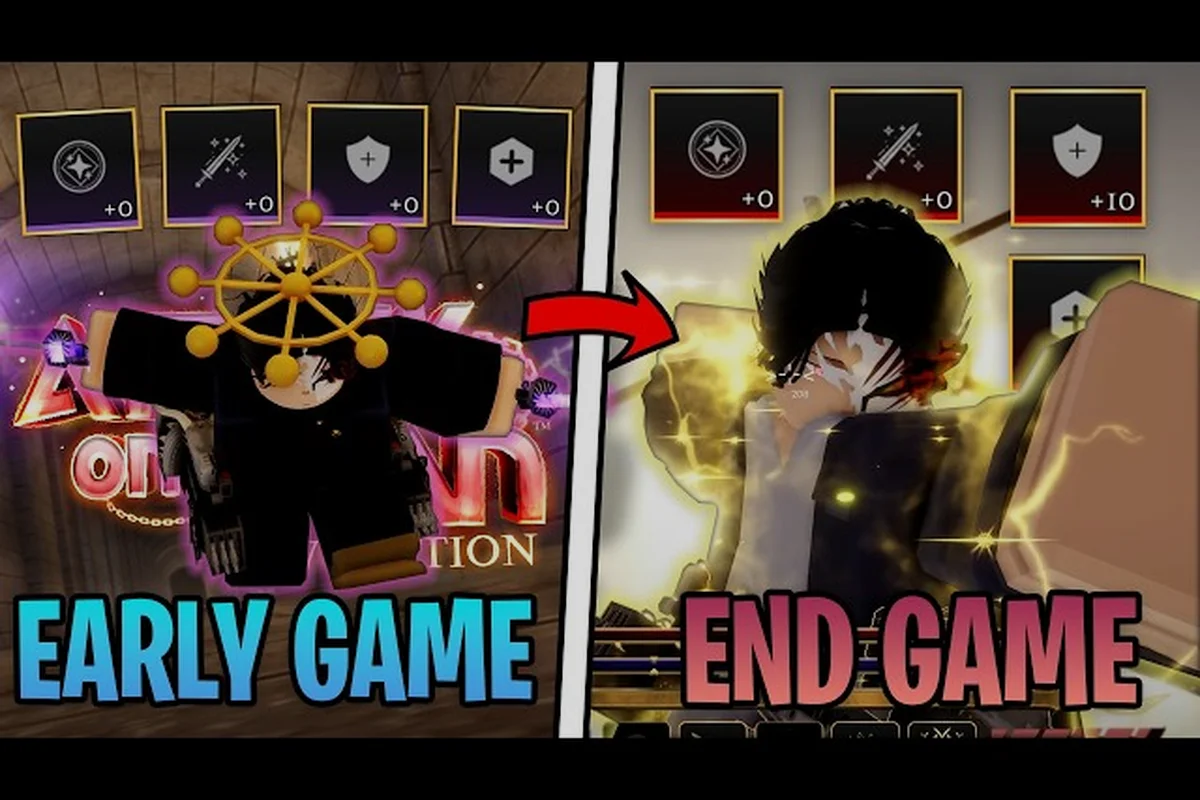
Gas upgrades determine how long you can pressure targets before ODM stamina becomes the limiting factor. In Attack on Titan Revolution, the right gas choices can preserve momentum during long fights, while the best weapon depends on whether you favor fast blade damage or Thunder Spear reach.
Gas Upgrades: Core Choices
Gas is more than a simple stamina refill in Attack on Titan Revolution. It supports the ODM movement loop, and choosing upgrades poorly can leave a strong build unable to maintain attacks through a full encounter. The useful approach is to identify your preferred fighting rhythm first, then improve Gas Capacity, Gas Refill Speed, or the stat that reduces gas consumption whenever that option is available in your current progression. Players who want a precise recommendation can use the Attack on Titan Revolution Damage Calculator alongside a build calculator because weapon damage alone does not reveal whether the setup can actually reach and maintain its attack range.
Gas Capacity versus refill speed
Gas Capacity determines the largest gas reserve your character can carry, while Gas Refill Speed controls how quickly the reserve replenishes. A larger reserve helps when a single move consumes a large amount of gas, but it cannot compensate for waiting too long between attacks. Refill speed is usually more valuable during repeated short engagements because it restores your ability to launch another sequence without breaking the rhythm.
| Upgrade priority | Best use case | Main advantage | Practical limitation |
|---|---|---|---|
| Gas Capacity | Long attacks and burst movement | More gas available before depletion | Does not speed up recovery |
| Gas Refill Speed | Repeated solo fights | Faster return to combat readiness | Smaller reserve still limits one huge expenditure |
| Gas consumption reduction | General all-around use | Every maneuver becomes less costly | Exact availability depends on the current game version |
| Balanced gas build | Uncertain enemy patterns | Fewer weaknesses across mixed encounters | Requires less extreme focus on one stat |
A balanced setup is usually the best starting point because Titan attacks do not arrive in a perfectly predictable order. Capacity gives you room to react, while refill speed reduces dead time after a missed angle. If your current equipment forces a choice, prioritize the stat that prevents the Gas Empty condition in ordinary combat rather than chasing a small theoretical gain.
Reading the gas bar during combat
The gas bar becomes more informative when you stop treating it as a simple green-to-red meter. Early in a fight, spend gas to create a safe angle. After a successful strike, maintain pressure only if the enemy has not shifted. If the bar falls sharply, stop adding unnecessary movement and use the recovery window to line up the next attack.
Reserve threshold is a practical idea rather than an official game term: keep enough gas for one correction maneuver and one finishing sequence. This prevents a build from looking strong in a short test but failing against enemies that change height or direction.
| Combat situation | Gas behavior to watch | Better decision |
|---|---|---|
| Gas drops after one heavy attack | Capacity may be too small | Increase capacity or use a more efficient weapon |
| Gas refills but the next attack still feels delayed | Refill speed may be low | Improve gas regeneration |
| Gas remains high but attacks land slowly | Weapon handling may be the issue | Test a faster weapon or change attack timing |
| Gas is stable in normal fights but fails against groups | Burst planning is too loose | Preserve gas for emergency escapes |
ODM Upgrade Priorities
ODM upgrades should follow the order of your actual gameplay problems. Attack on Titan Revolution gas upgrades solve endurance, but they cannot repair weak hit timing or a weapon whose range makes positioning difficult. A reliable build therefore improves mobility and gas management before chasing a small increase that does not change normal encounters.
The practical upgrade order
Start by securing the weapon that matches your attack distance. Blades reward close positioning and rapid attacks, while Thunder Spears cover more distance but require careful aim. Next, improve the ODM mobility stat that controls how smoothly you travel around a Titan. After that, add capacity, refill speed, or consumption reduction according to the symptom you experience.
| Order | Upgrade area | Reason for priority | When to reconsider |
|---|---|---|---|
| 1 | Weapon fit | Sets required positioning | Never prioritize raw damage over usability |
| 2 | Movement control | Improves angle consistency | If movement already feels smooth |
| 3 | Gas capacity | Prevents large attacks from draining the reserve | If you rarely suffer gas depletion |
| 4 | Refill speed | Reduces downtime between exchanges | If one burst consumes most of the bar |
| 5 | Lower-tier stats | Improves leftover performance | Only after the core loop works |
This approach also prevents wasteful upgrading. Many players raise a visible damage number because it feels immediate, yet they still struggle because their weapon cannot reliably connect. The practical question is whether an upgrade lets you complete a full attack cycle: approach, align, strike, disengage, and repeat.
Choosing upgrades for different play styles
Aggressive players benefit from refill speed and consumption reduction because their setup often uses short, repeated attacks. Defensive players may prefer capacity, which leaves enough gas for a mistake without requiring a complete reset. Balanced players should distribute points across capacity and recovery while keeping mobility high. A movement-focused player can also improve efficiency by reviewing the Attack on Titan Revolution Prestige Guide before spending resources on temporary gear. Permanent progression and temporary stat gains should complement each other rather than compete for the same objective.
Close-range pressure means staying near the Titan and maximizing the number of clean hits. It requires gas efficiency, quick recovery, and confidence that blades can reach the target. Long-range spacing favors Thunder Spears, cleaner aim, and enough reserve to correct a missed shot without abandoning the fight.
Blades versus Thunder Spears
Blades and Thunder Spears create different combat rhythms. Blades are the natural choice for aggressive close-range pressure because they support fast, repeated strikes. Thunder Spears are better suited to players who want distance, readable angles, and the ability to engage from outside a Titan’s immediate reach. There is no universal winner because your current progression and preferred camera angle matter.
Blades for rapid pressure
A blade setup feels most effective when you can maintain a stable orbit and attack immediately after a hook pull. Its main advantage is the pace of the encounter. A successful pull creates an opening, and a short blade sequence can exploit it before the enemy turns back toward you.
| Blade advantage | Effect in practice | Build implication |
|---|---|---|
| Fast repeated attacks | More chances during one opening | Favor refill speed and efficiency |
| Close-range pressure | Less dependence on long lead time | Improve movement control |
| Simple positioning | Rewards immediate follow-up | Keep a clear escape route |
| Aggressive visual feedback | Encourages continuous engagement | Avoid spending gas without a valid angle |
Blades expose their weakness when movement is inaccurate. Because you need to remain within attacking distance, a poor angle can waste the entire approach. A blade player should treat gas upgrades as support for hit consistency, not as permission to move constantly without a plan.
Thunder Spears for spacing and reach
Thunder Spears change the geometry of a fight. Their reach lets you attack without entering the Titan’s closest space, which can reduce the pressure to spend gas on constant repositioning. That advantage is meaningful when your movement controls feel imprecise or when an enemy closes distance quickly.
| Thunder Spear advantage | Effect in practice | Build implication |
|---|---|---|
| Greater attack distance | More time to select an angle | Keep capacity for corrections |
| Less need for close passes | Lower exposure during recovery | Focus on aim and line of sight |
| Cleaner encounter rhythm | Fewer continuous gas drains | Watch refill speed between attacks |
| Strong single-target purpose | Useful when repositioning is difficult | Upgrade accuracy before minor damage gains |
The weakness is equally important. Missing a Thunder Spear can leave you waiting for the next opportunity, and repeated long-range attacks may still consume enough gas to break momentum. Use the Attack on Titan Revolution Common Perks guide to check which perks support your chosen attack pattern rather than assuming rarity automatically improves the setup.
Making the final weapon decision
Choose blades when you can repeatedly close the distance, enjoy fast follow-ups, and want to maintain pressure. Choose Thunder Spears when you prefer safer spacing, need more reach, or find close-range attacks inconsistent. If both styles feel weak, the problem may be movement timing or gas efficiency rather than the weapon itself.
| Player situation | Better fit | Reason |
|---|---|---|
| Strong close positioning | Blades | Fast pressure rewards shorter range |
| Difficulty maintaining angle | Thunder Spears | Reach reduces the need to pass close |
| Prefers quick successive hits | Blades | Blade attacks fit rapid exchanges |
| Wants safer solo engagements | Thunder Spears | Distance creates more decision time |
| Short gas reserve | Whichever uses fewer attacks | Efficiency matters more than tier |
Weapon Tier List by Build Role
A universal Attack on Titan Revolution weapon tier list can be misleading because a powerful weapon still performs poorly when the player cannot use its intended range. The more useful ranking groups weapons by combat role, attack speed, reach, and handling. Those factors determine whether a choice supports blades, Thunder Spears, or a mixed ODM pattern.
Ranking the options by practical value
The table below is a build-focused tier guide rather than a claim about exact official drop rates. S Tier means the weapon fits a clear, effective combat pattern, while lower tiers can still be useful when their handling matches a player’s mastery.
| Practical tier | Weapon role | Why players value it | Best fit |
|---|---|---|---|
| S | High-tier blades | Strong close-range damage and fast pressure | Aggressive ODM players |
| S | High-tier Thunder Spears | Reach improves safe positioning | Ranged and solo fighters |
| A | Efficient mid-tier blades | Easier gas use and consistent attacks | Players balancing damage and cost |
| A | Efficient mid-tier Thunder Spears | Useful reach with better economy | Positioning-focused players |
| B | Heavy-damage slow weapons | Excellent hit impact but limited tempo | Players who can land the strike |
| B | Basic starter options | Low commitment for learning the controls | New players and early training |
| C | Mismatched specialist options | Narrow situations or awkward handling | Builds that solve a specific problem |
A weapon becomes build-compatible when it allows repeated attacks without forcing unnecessary gas expenditure. That principle places efficient starter and mid-tier options above a theoretically powerful weapon when the latter demands perfect execution. If you are still deciding what to equip, the Attack on Titan Revolution Artifact Farming guide can help with the gear side of the comparison.
Why the top weapon is not always the answer
The strongest personal weapon is the one you can use without wasting resources. A high-tier option may win in a short damage test, but a lower-tier weapon can produce better results when its attack speed and reach match the situation. This is why a build calculator should compare more than a single damage value whenever the interface allows it.
Consider four variables before upgrading an ODM weapon in Attack on Titan Revolution: damage per successful strike, attack speed, effective reach, and gas cost. Each upgrade changes the cost of sustaining a combo: stronger damage may make a hit safer to land, but rapid attacks can drain gas faster, while extended reach can improve positioning yet consume more gas on each maneuver. For example, a high-reach blade is useful against large Titans when safe distance matters, whereas a fast, close-range weapon can pressure an agile target if its gas consumption remains manageable. Compare these values in an Attack on Titan Revolution build calculator rather than selecting solely by weapon tier, and account for the gas upgrades available to your character, since added gas capacity can make otherwise sustainable ODM combos more practical.
-
Damage: The result of a successful hit.
-
Speed: How quickly you can launch another attack.
-
Reach: How safely you can position the hit.
-
Gas cost: How much of your mobility resource the maneuver consumes.
| Weapon comparison | Best result | Worst result |
|---|---|---|
| High damage, low speed | Large single hit | Pressure collapses against moving enemies |
| High speed, low reach | Rapid pressure at close range | Constant repositioning |
| High reach, high gas cost | Safe distance and heavy impact | Gas empties before follow-up |
| Balanced stats | Fewer situational problems | May not specialize for one boss |
Comparing recommended ODM loadouts
A solid blade build should combine a fast blade with balanced capacity and refill speed. A Thunder Spear build should preserve more capacity because each shot and correction may require a deliberate approach. Mixed builds need especially careful gas management, since changing attack ranges can create unnecessary movement.
| Build | Weapon | Gas emphasis | Mobility emphasis |
|---|---|---|---|
| Swift pressure | Blades | Refill speed and efficiency | High agility and fast follow-up |
| Controlled pressure | Blades | Balanced capacity and refill | Consistent orbit control |
| Long-range control | Thunder Spears | Capacity for corrections | Accurate approach and safe distance |
| Flexible range | Either weapon type | Balanced gas management | Strong general mobility |
| Heavy-hitting specialist | Slower heavy weapon | High capacity | Reliable positioning |
These categories remain useful even as the game updates because they describe function rather than a permanent database of item names. For exact damage comparisons, use a current Attack on Titan Revolution build calculator because weapon values and available upgrade paths may change with the version.
Gas Upgrade Build Recipes
A useful build recipe connects one weapon style, one movement goal, and two gas priorities. This prevents the common mistake of raising every stat equally. Because the game’s available choices can evolve, confirm each upgrade screen before committing scarce resources, and treat the following recipes as role-based targets rather than exact patch-specific requirements.
Recipe for sustained blade pressure
Start with an efficient blade, raise movement control before adding gas, and then split investment between gas refill speed and consumption reduction. Capacity still matters for heavy attacks, but sustained pressure depends more on recovering quickly between bursts. For example, a fast-refill ODM build can keep the gas bar ready for another dodge-and-slash exchange, while a consumption-reduction build may preserve enough gas for a longer combo against a large enemy. Compare both approaches with the same blade and attack route to see which recovers more reliably in practice.
| Build stage | Upgrade focus | Test objective |
|---|---|---|
| First | Core weapon and basic ODM access | Land several consecutive attacks |
| Second | Movement control | Hold a stable attacking angle |
| Third | Gas refill speed | Restart quickly after an exchange |
| Fourth | Consumption reduction | Perform a full combo without depletion |
| Refinement | Capacity if needed | Preserve reserve for difficult enemies |
Record two details during testing: whether the bar empties during one combo and how long you wait before the next attempt. If depletion happens within one combo, add capacity or choose a more efficient blade. If the combo succeeds but recovery is slow, improve refill speed instead.
Recipe for Thunder Spear spacing
Begin with adequate capacity, because a Thunder Spear player needs room for both the main attack and a correction. Keep movement reliable, then increase damage only after the setup consistently lands. This method prioritizes the Correction Buffer, the reserve held back for a missed or obstructed shot.
| Build stage | Upgrade focus | Test objective |
|---|---|---|
| First | Reach-oriented weapon | Connect from a safe distance |
| Second | Gas capacity | Preserve a correction buffer |
| Third | Movement control | Reach the attack angle cleanly |
| Fourth | Refill speed | Recover between separated attempts |
| Refinement | Accuracy or damage | Improve weak hit quality |
Do not fill the entire gas bar with attack-oriented stats when the reserve is needed for correction. A Thunder Spear encounter becomes much easier when you can shoot, reposition, and shoot again without waiting for a full refill. For example, leave roughly one usable gas segment untouched after the first throw: if the shot misses a target’s side or a wall blocks the line, spend that reserve on a quick correction instead of committing every point to damage. Gas Capacity, Refill Speed, and Movement Control then work together to preserve this Correction Buffer, giving your Thunder Spear a second accurate attack during the same engagement.
Recipe for mixed ODM play
Mixed builds benefit from balanced capacity and refill speed because they regularly alternate between close and distant attacks. Use a weapon that feels comfortable across both ranges, and keep a moderate reserve for emergency movement. The goal is flexibility without allowing the gas bar to become a permanent limitation.
| Situation | Immediate adjustment | Long-term priority |
|---|---|---|
| Often runs dry in one combo | Add capacity | Improve consumption efficiency |
| Has gas but waits too long | Add refill speed | Improve attack timing |
| Cannot reach either range comfortably | Change weapons | Raise movement control |
| Performs well but loses close exchanges | Test faster blades | Increase refill speed |
| Performs well at range but is overwhelmed | Test faster blades or stronger mobility | Add capacity |
These recipes also show why Attack on Titan Revolution ODM upgrades should be tested as a complete package. For example, a mixed build that alternates Blades and Thunder Spears may benefit from added Capacity, but that extra reserve can still be spent too quickly if Refill Speed remains weak. Conversely, higher Refill Speed does not help when the weapon’s range makes close positioning awkward. Compare each upgrade against the “add capacity,” “improve refill speed,” and “change weapons” priorities in the table, then use a build calculator to check whether the stat gain improves real gas uptime rather than merely raising a headline number.
Testing and Refining Your Final ODM Setup
Final testing should measure consistency rather than a single impressive run. Complete several encounters with the same enemy and note whether you can attack, reposition, and recover without running out of gas. Player experience and community gameplay reports are useful for identifying common patterns, but they should not replace your own tests because camera control and familiarity affect results.
A repeatable five-step test
Begin with a normal encounter and do not change equipment during the run. Watch the gas bar through the full fight, record the point where it becomes low, and note whether you reached that point because of repeated attacks or a single heavy maneuver. Finish by testing the same scenario after one upgrade so you can identify the actual benefit.
| Test step | What to observe | Decision rule |
|---|---|---|
| 1. Opening approach | Gas spent before first attack | Improve positioning if usage is excessive |
| 2. Main combo | Bar change across consecutive hits | Add capacity if one combo empties it |
| 3. Recovery | Time before the next attack | Add refill speed if downtime is the issue |
| 4. Emergency movement | Reserve left for corrections | Preserve part of the bar for emergencies |
| 5. Repeated encounter | Performance after the upgrade | Keep the change only if it improves consistency |
If your goal is an accurate gas-upgrade value estimate, record several runs rather than one. The median is usually more informative than the best run because it reflects normal performance. For overall account progression, the Attack on Titan Revolution Max Level guide can help determine whether your current build is prepared for the next milestone.
Common mistakes to correct
Overinvesting in gas capacity is common because the benefit is easy to understand. However, a large reserve is not valuable if every fight ends before it refills. Another mistake is changing weapons and stats together, which makes it impossible to identify the source of improvement.
| Mistake | Why it hurts | Correction |
|---|---|---|
| Maxing capacity first | Recovery remains slow | Test refill speed as well |
| Ignoring movement | Gas drains without clean hits | Improve control before minor damage |
| Copying a build blindly | The timing may not fit your style | Reproduce the combat role, not every point |
| Comparing one damage number | Real output depends on hit rate and gas | Compare full attack cycles |
| Upgrading after every defeat | Chases losses instead of patterns | Record several failures before changing stats |
Frequently Asked Questions
What are the best Attack on Titan Revolution gas upgrades?
The best upgrades depend on where your gas bar fails. Add capacity when one combo empties it, favor refill speed when recovery between attacks is slow, and prioritize consumption reduction when movement is efficient but gas usage remains high. Keep enough reserve for correction, because preserving an escape option is often more valuable than squeezing out one extra attack.
Should blades or Thunder Spears be used for a new ODM build?
Blades suit players who can close distance reliably and enjoy fast repeated pressure. Thunder Spears are easier to use when you prefer greater reach, need more time to aim, or struggle to remain near an enemy. Test each style in the same encounter and compare gas use, hit consistency, and recovery rather than relying only on a damage comparison.
Is a high-tier weapon always the Attack on Titan Revolution best weapon choice?
No. A high-tier weapon is strongest when its attack speed, reach, and handling match your positioning. An efficient mid-tier blade can outperform a heavy specialist for players who land fast attacks often. Use a current build calculator to compare expected performance, then verify the result in combat because actual value also depends on hit rate and gas consumption.
How should Attack on Titan Revolution ODM upgrades be prioritized?
Prioritize weapon fit first, then movement control, followed by the gas stat that solves your observed problem. Capacity comes before refill speed when a single maneuver drains the reserve, while refill speed comes first when the bar is healthy between fights but slow to recover. Upgrade one layer at a time so you can measure its effect.
How do I use an Attack on Titan Revolution build calculator effectively?
Enter the weapon, relevant ODM attributes, available upgrade choices, and gas-related bonuses when the calculator supports them. Compare several practical scenarios instead of reviewing one maximum-damage result. Remember that the calculator cannot fully model camera control, timing, or accuracy, so use its figures to shortlist equipment and then confirm the build through repeated combat tests.
Attack on Titan Revolution gas upgrades work best when they support a specific combat rhythm rather than simply filling every available stat. Match the weapon to your preferred range, improve movement consistency, then use capacity, refill speed, and efficiency to remove the exact bottleneck visible in your fights. The strongest final setup is the one that maintains useful attacks without draining your options for recovery.